Winter Costs: Electric Car vs ICE Vehicle — Which Is More Cost-Effective in Winter?
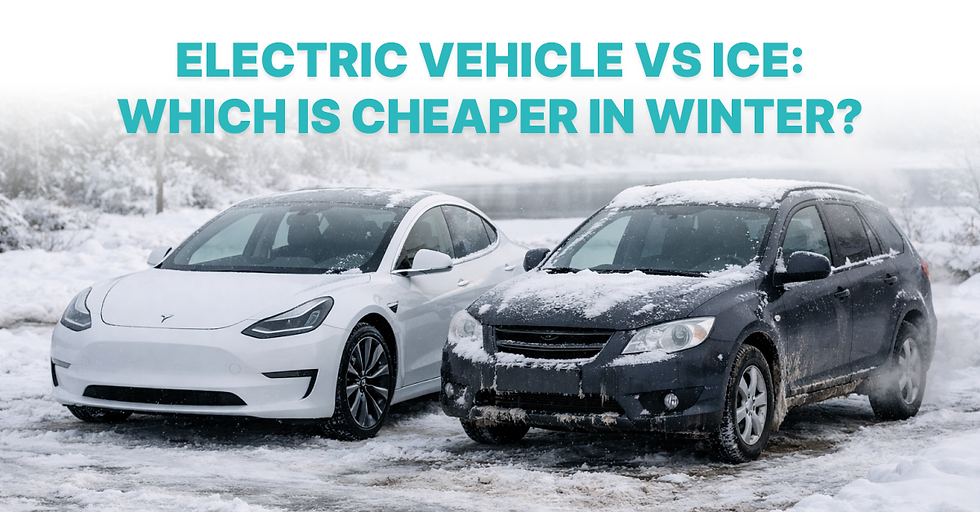
Winter is traditionally considered a challenging season for cars, and electric vehicles raise especially many questions. Does an electric car really become more expensive to use in cold weather? Let’s compare the winter operating costs of an electric vehicle and a car with an internal combustion engine (ICE) in real conditions.
How Winter Affects Electric Vehicle Costs
In cold weather, an electric car consumes more energy than in summer. The main reasons include:
🔹 cabin heating;
🔹 battery warming;
🔹 reduced battery efficiency at low temperatures.
On average, electricity consumption increases by 15–30% in winter. However, even with this increase, the cost per 100 km usually remains lower than that of an ICE vehicle—especially when charging at home or using off-peak electricity rates.
Winter Costs of ICE Vehicles
For gasoline and diesel cars, winter also brings additional expenses that are often underestimated:
🔸 increased fuel consumption due to engine warm-up;
🔸 short trips where the engine doesn’t reach optimal operating temperature;
🔸 costs for oil, filters, spark plugs, and the battery;
🔸 risk of cold starts.
In freezing temperatures, fuel consumption rises by 10–20%, and regular engine warm-ups directly impact overall expenses.
Cost Comparison per 100 km in Winter
In real-world conditions:
electric vehicle — cheaper due to lower energy costs and fewer consumable parts;
ICE vehicle — more expensive because of fuel costs, maintenance, and efficiency losses in winter.
Even with a reduced driving range, an electric car remains more cost-effective for daily use during winter.
Maintenance and Hidden Costs
In winter, an electric vehicle does not require:
✅ oil changes;
✅ engine warm-up;
✅ complex maintenance.
By contrast, winter expenses for ICE vehicles often increase mainly due to servicing rather than fuel alone.
Conclusion
Despite common myths, an electric car does not become more expensive in winter than an ICE vehicle. Even with higher energy consumption, it remains a more economical choice for everyday driving—especially in urban environments.
An electric car in winter offers not only comfort without cold starts, but also real cost savings.